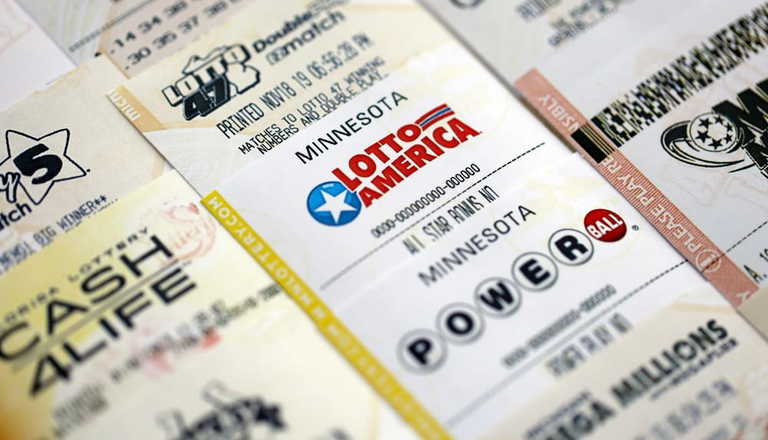

not winning is just an important concept as winning when it comes to the lottery
Winning the jackpot is a statistical anomaly, yet millions of people buy lottery tickets every week. For most, the experience ends with a non-winning ticket tossed into the trash. However, treating a non-winning ticket as a failure misses the core reality of how lotteries operate: not winning isn't a surprise twist or a stroke of bad luck. It is the foundational mechanic of the entire system.
The odds are stacked!
To understand the lottery, one must view non-winning not as an unfortunate side effect, but as an essential element of the design, psychology, and structural balance of playing. The fundamental structure of any lottery is built on extreme odds. When you purchase a ticket for major lotteries like Powerball or Mega Millions, the probability of hitting the grand prize is roughly 1 in 292 million or 1 in 302 million, respectively.
When odds are stacked to this degree, non-winning isn't just a potential outcome, it is the expected mathematical default. Out of tens of millions of tickets sold for a single drawing, 99.9999% of them are designed not to win..
If winning were frequent, two things would happen: jackpots would remain small, and the economic model of the lottery would collapse. The accumulation of massive, eye-watering jackpots is driven entirely by millions of people not winning drawing after drawing. In a very real sense, every non-winning ticket contributes directly to the grandeur of the prize that eventually gets claimed.
And yet we play
If not winning the lottery is almost guaranteed, why do people participate? The answer lies in what is actually being purchased. When you buy a lottery ticket, you are not paying for a guaranteed return on investment. You are buying a small, temporary license to dream. Psychologists often refer to this as purchasing "entertainment value" or the "anticipation effect."
For the price of a ticket, a player receives days or hours of low-stakes daydreams:
- What would I do if I didn't have to work on Monday?
- Which family members would I help?
- Where would I travel first?
This temporary escape from daily routines carries psychological utility. The value of the transaction occurs before the numbers are drawn, during the period of anticipation. Once the drawing takes place and the ticket is revealed to be non-winning, the entertainment period ends.
Treating the ticket as an entry fee for an experience rather than a financial transaction changes the perspective: the non-win is simply the conclusion of the show.
The design of modern lotteries includes secondary prize tiers to create smaller payouts. While these payouts keep players engaged, they also reinforce the psychological dynamic of play.
When a player matches two or three numbers out of six, it creates a phenomenon known as the "near-miss effect." The brain interprets matching some numbers as being "close" to winning the jackpot, even though mathematically, matching three numbers does not alter the near-zero odds of matching all six on the next try.
Because non-winning is built into the framework of the game, maintaining a healthy approach to playing requires clear personal boundaries. Problems arise when players treat the lottery as a financial plan, a relief mechanism for debt, or a system that can be "beaten" with persistence.
Key principles for maintaining a balanced perspective include:
- Budgeting as Entertainment: Money spent on tickets should come from the discrete discretionary budget reserved for leisure—the same pool used for movies, dining out, or video games.
- Avoiding the Sunk Cost Fallacy: Buying more tickets does not meaningfully change individual odds. Purchasing 10 tickets increases your odds from 1 in 300 million to 10 in 300 million—a change so minuscule it is practically invisible.
- Accepting the Cost: The moment money is exchanged for a ticket, that money should be considered spent, not invested.
When the expectation of not winning is fully accepted beforehand, a non-winning outcome generates no disappointment, while any small return becomes a pleasant surprise. On a macro level, the non-winning nature of the vast majority of tickets is what allows public lotteries to function as revenue generators for state/province and local programs. Because millions of players accept non-winning outcomes every week, funds are aggregated into substantial public budgets. While this does not make a non-winning ticket a direct charitable donation, it reflects how individual losses collectively finance public services.
Playing the lottery is an exercise in engaging with extreme probabilities for the sake of brief, lightweight hope. The structure of the game ensures that almost every participant will experience non-winning almost every time they play. Accepting that non-winning is part of playing removes resentment and frustration from the equation. A non-winning ticket isn't a failure of luck or a personal setback; it is simply the standard cost of participating in a brief, shared cultural ritual of "what if." By holding this perspective, players can keep the experience light, enjoyable, and safely bounded within the realm of casual entertainment.