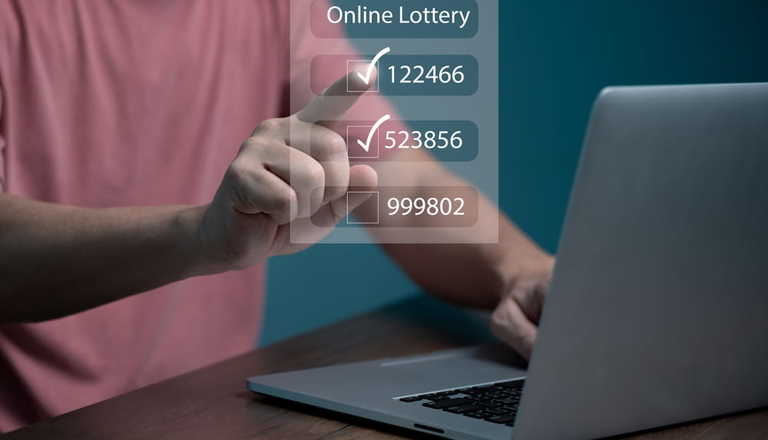

Is using your computer to pick lottery numbers a good move?
For as long as lotteries have existed, players have searched for a edge or a secret system, a lucky routine, or a mathematical pattern to crack the code. In the modern era, that quest has moved from scratchpads and lucky charms to high-powered desktop processors, statistical software, and artificial intelligence.
Computers are random number generators
Using a computer to generate or analyze lottery numbers has become one of the most popular hobbies among tech-savvy gamblers and data enthusiasts. But can a computer actually help you win the lottery? The answer lies at the intersection of probability theory, computational randomness, human psychology, and game design.
When you ask a computer or a lottery kiosk's "Quick Pick" system to select numbers, it relies on a Pseudo-Random Number Generator (PRNG). Computers are inherently deterministic—given the exact same input and sequence of instructions, a computer will always produce the exact same output. Because true randomness is difficult for pure code to achieve, PRNG algorithms use mathematical formulas starting from an initial value known as a seed. Common seeds include the exact current system time down to the millisecond.
- Pseudo-Randomness: Excellent for everyday software, casual gaming, and generating quick number sets. While predictable in theory if the seed and algorithm are known, high-quality modern algorithms are functionally random for human purposes.
- True Randomness (TRNG): Used by official computerized lottery drawings or high-security cryptography. TRNGs harvest atmospheric noise, thermal variation, or radioactive decay to produce non-deterministic sequences.
For individual players running local scripts, PRNGs are more than sufficient to eliminate human bias.
Data scientists, programmers, and hobbyists take several distinct approaches when using personal computers to choose numbers. Players write scripts to output distinct sets of non-repeating integers bounded by game rules (e.g., picking 5 numbers between 1 and 69, plus a Powerball from 1 to 26).
Many players download historical lottery databases into spreadsheet software like Microsoft Excel or statistical tools. They run queries to group numbers by:
- Hot Numbers: Integers drawn most frequently over a specific historical window.
- Cold Numbers: Integers that have not appeared in a long duration.
- Overdue Pairs: Number combinations that historically occur together but haven't appeared recently.
With the rise of generative AI, enthusiasts regularly prompt AI models like ChatGPT to search for subtle correlations, seasonal variances, or high-dimensional patterns within historical draw sequences.
Despite sophisticated algorithms and AI models, a computer cannot increase your underlying probability of matching the winning draw.
| Concept | The Myth | The Mathematical Reality |
|---|---|---|
| Memory | "Number 17 hasn't been drawn in 6 months, so it's due." | Draws are independent events. Physical ping-pong balls or hardware TRNGs have no memory of past results. |
| Hot Patterns | "AI identified a pattern in Tuesday draws." | Past draws do not influence future outcomes in a fair, secure game. |
| Edge Creation | "Custom algorithms give better odds than Quick Picks." | Every valid combination has an identical mathematical probability of being selected. |
In major games like Powerball or Mega Millions, odds sit around 1 in 292 million or 1 in 302 million per line. Whether chosen by a supercomputer, a basic script, an AI model, or handwritten fortune cookies, every valid sequence holds the exact same chance.
Using your computer to pick lottery numbers won't defeat the laws of probability or guarantee a jackpot. However, coding your own solution or leveraging un-biased pseudo-random generation remains a practical approach. It eliminates emotional bias, ensures true structural dispersion across the entire number matrix, and helps protect you from sharing a jackpot should your numbers ever hit.