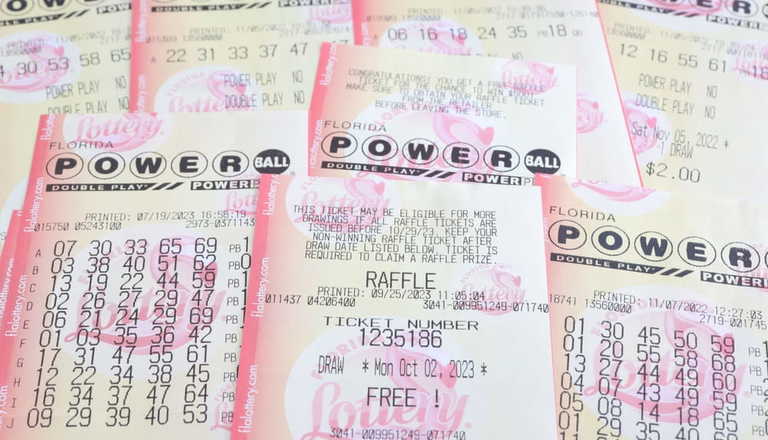

Sometimes it's not the jackpot, it's a free play win, and here's why that's ok.
In the world of gambling, there is a curious phenomenon that defies strict economic logic: the "Free Play" winner. While most players walk into a convenience store dreaming of private islands and early retirement, the most frequent "win" they encounter is a slip of paper that simply grants them another chance to play.
Break even
Mathematically, a free play is a break-even event—a return to zero. Yet, for the average lottery enthusiast, winning a free play feels significantly better than simply not winning at all. It carries a psychological weight that far exceeds its face value. To understand why lottery players like to win free plays, we have to look past the dollar amount and dive into the complex intersection of dopamine, hope, and the human brain’s struggle with probability.
The most powerful reason players enjoy free plays is a phenomenon known as the Near-Miss Effect. In the brain, a near-miss (getting two out of three symbols, or winning a free play instead of the jackpot) is processed almost identically to a win. When you win a free play, your brain doesn't see a "zero-sum gain"; it sees validation. It interprets the result not as a failure to win the jackpot, but as a sign that you are "close" or that your "luck is changing." Research shows that near-misses stimulate the ventral striatum, the same reward centre activated by a financial payout triggering a spike in dopamine. This chemical rush keeps the player engaged, reinforcing the behaviour even when no actual wealth has been created.
For many, the primary product of the lottery isn't money, it's anticipation. As soon as a ticket is checked and found to be a non-winner, the "dream phase" ends. The fantasy of what you would do with millions of dollars is replaced by the mundane reality of your daily commute. A free play acts as a bridge for the fantasy. It allows the player to remain in the "state of the dream" for another draw cycle without having to reach back into their wallet. By winning a free play, the player hasn't just won a ticket; they have won another three days of imagining a different life. It is an extension of the entertainment value of the game.
Psychologically, humans are prone to the House Money Effect. This is the tendency to treat found money (or free rewards) differently than "earned" money. When a player wins a free play, they perceive the next draw as having zero risk. "It’s a free shot at the title," a player might think.
Because the ticket didn't cost them any additional out-of-pocket cash, the potential reward feels even sweeter. It removes the "pain of paying", the psychological sting we feel when spending money, while keeping the full upside of the jackpot intact. By flooding the game with small prizes like free plays, the lottery creates a "high-hit frequency." This makes the game feel "loose" or "winnable," even though the vast majority of those wins result in no net financial gain for the player.
Lottery players often fall victim to the Sunk-Cost Bias—the idea that because they have spent so much money on tickets over the years, they are "due" for a win. Quitting feels like admitting defeat and walking away from an investment. A free play provides a small, tangible reward that justifies the past expenditure. It acts as a "micro-win" that signals to the player, "See? You were right to keep playing. You got something back." It provides enough positive reinforcement to quiet the rational voice that might suggest the lottery is a non-winning game.
Another slice of the pie
Ultimately, lottery players like winning free plays because they provide the emotional benefits of winning without the lottery having to pay out actual capital. It is a psychological loop that feeds on hope, sustains engagement, and provides a harmless (if illusory) sense of progress. While a free play won't pay the mortgage or buy a luxury car, it offers something that, for many, is just as valuable in the moment: the right to stay in the game.