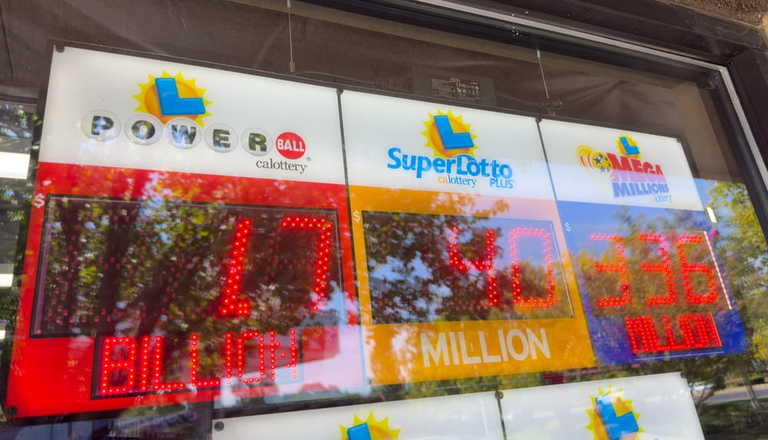

Why do stores advertise their lottery wins?
Walk into almost any convenience store, gas station, or dedicated mall kiosk and you are greeted by a familiar sight: neon-bright posters, handwritten cardboard signs, or official corporate decals proudly proclaiming, "Winning Ticket Sold Here!" Often, these signs are accompanied by the exact dollar amount—whether it is a modest $50,000 scratch-off or a staggering $500 million Powerball jackpot—alongside the date of the historic win.
Sense doesn't come into luck!
To a strictly logical observer, these signs make very little sense. The fact that a store sold a winning ticket last week, last month, or five years ago has absolutely zero mathematical bearing on whether the next ticket sold there will be a winner. Every single lottery draw is entirely independent, and every ticket printed has the exact same astronomical odds.
Yet, lottery retailers go out of their way to advertise past victories, and lottery corporations gladly supply them with official merchandising to do so. Why? Because while it may not make mathematical sense, it makes perfect psychological and economic sense. The "Winning Ticket Sold Here" phenomenon is a masterclass in behavioural economics, consumer psychology, and local marketing.
When a store displays a giant banner reading "Winner: $250 Million Sold Here," it forces the concept of winning to the forefront of a customer's mind. Instead of thinking about the statistical reality—that the odds of winning the lottery are roughly 1 in 300 million—the consumer focuses on the concrete proof that winning is possible. The billboard transforms a abstract, mathematical impossibility into a tangible reality. The thought process shifts from "Nobody ever wins the lottery" to "Someone won right here, where I am standing." This breeds the concept of the "lucky store." Humans are naturally hardwired to find patterns in randomness. When a specific retailer sells a massive winning ticket, players subconsciously attribute the win to the location rather than to sheer, random coincidence.
Similar to a gambler believing a slot machine is "hot" or a basketball player is on a streak, lottery players often believe certain stores possess a mystical streak of good fortune. Retailers leverage this fallacy to position themselves as a portal to wealth. The odds of winning a major jackpot are so microscopic that the human brain struggles to truly conceptualize them. We cannot easily visualize 1 in 300 million. Because the numbers are so vast, buying a lottery ticket can feel like throwing money into a black hole.
Advertising a past winning ticket bridges this cognitive gap. It grounds the lottery in physical reality. With the sign, the store becomes a proven origin point for a multi-millionaire. Seeing that a regular person stepped into this exact corner store, stood on these exact floorboards, and walked out with a life-changing ticket makes the dream feel accessible. It creates proximity to success. If it happened to a stranger at this cash register, the subconscious logic dictates, it could happen to me at this cash register.
While psychology explains why consumers react to the signs, economics explains why the stores are so eager to put them up. Selling lottery tickets is not inherently a high-margin business for retailers. Generally, stores earn a small commission—typically between 5% and 6%—on every ticket sold. However, the real financial windfall for a retailer comes in two forms: bonuses and foot traffic.
In most jurisdictions, lottery corporations reward the store that sells a jackpot-winning ticket with a hefty cash bonus. This can range from a few thousand dollars for smaller prizes to upwards of $50,000 or even $1 million for historic Powerball or Mega Millions jackpots.
Lucky stores
When a store is revealed to have sold a winning ticket, it instantly becomes a local landmark. Media outlets flock to the location to interview the store owner. This free publicity triggers a massive surge in foot traffic. When players line up to buy tickets at a "lucky" store, they rarely buy just a lottery ticket. They buy a coffee, a pack of gum, a jug or bag of milk, or a tank of gas. The "Winning Ticket Sold Here" sign is essentially a permanent, free marketing tool that drives high-margin convenience sales long after the jackpot bonus has been spent.
Modern retail is all about the "customer experience," and lottery kiosks are no exception. A bare counter with a lottery terminal is sterile and transactional. A kiosk plastered with historical wins, oversized commemorative checks, and photos of smiling winners creates an environment of excitement and hope.
Lottery kiosks, particularly those in shopping malls or transit hubs, rely heavily on impulse buys. Commuters or shoppers walking past are not necessarily planning to play the lottery. However, the bright, celebratory imagery of past wins creates a sensory trigger. It shifts the consumer's mindset from their mundane daily routine into a temporary fantasy world of luxury, freedom, and wealth. The sign is the catalyst for that mental shift.
From a purely mathematical standpoint, buying a lottery ticket at a store that just sold a jackpot winner is identical to buying one at a store that has never sold a winner in fifty years. The balls in the lottery machine have no memory; they do not care where the paper was printed.
But humans do not live their lives by pure mathematics. We live our lives through stories, emotions, and beliefs. By advertising past wins, lottery stores transform a cold game of brutal probabilities into a warm narrative of luck, destiny, and possibility. As long as people dare to dream of striking it rich overnight, those bright, triumphant signs will continue to decorate storefronts, quietly convincing us that the next big winner could be standing right where we are.