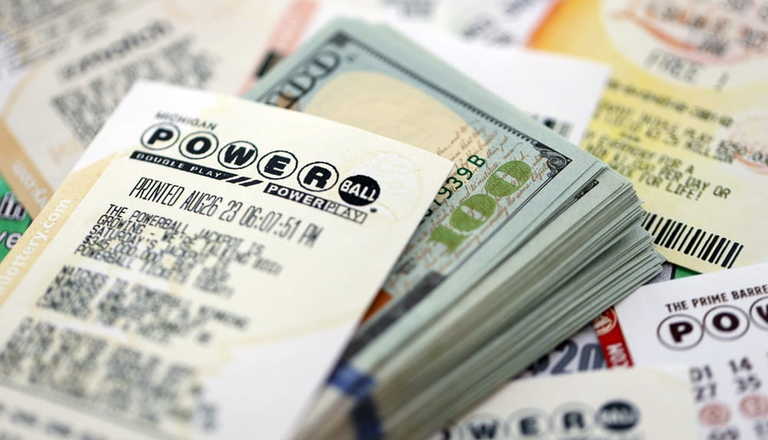

Winning the lottery once would be a dream, but imagine winning many times over?
Winning the lottery is widely considered the ultimate "once-in-a-lifetime" event. Statistically, the odds of hitting a major jackpot like Powerball or Mega Millions often hover around 1 in 300 million. To put that in perspective, you are more likely to be struck by lightning, bitten by a shark, and becoming a billionaire through traditional means—all in the same year.
Lightning strikes twice!
Yet, there exists a microscopic, envied, and often scrutinized group of individuals for whom the "once" in "once-in-a-lifetime" simply doesn't apply. From one man who won seven lottery prizes, to a woman who won four multi-million dollar jackpots, multiple lottery winners defy the laws of probability. But what actually happens when a player wins the lottery many times over? Behind the headlines of "luckiest person alive" lies a complex intersection of mathematical anomaly, psychological pressure, and intense legal scrutiny.
When someone wins twice, the public often cries "fix" or "fraud." However, mathematicians point to the Law of Truly Large Numbers. This principle states that with a large enough sample size, any outrageous thing is likely to happen. While the odds of you winning twice are astronomical, the odds of someone winning twice are actually quite high, due to frequent winners often reinvesting their smaller winnings back into more tickets, or spending thousands of dollars a week on tickets, effectively "buying" better odds through sheer volume.
In almost every jurisdiction, a second major win triggers an automatic internal investigation by the lottery commission. Lottery security divisions are staffed by former law enforcement officers whose job is to ensure the integrity of the game. When a repeat winner surfaces, they look for three specific things. They check if the winner has any connection to lottery employees, retail owners, or the software companies that manage the draws. The "Ten-Percenter" Scam is a common form of money laundering. A person who has won a large sum but wants to avoid taxes or child support "buys" a winning ticket from someone else for cash (usually at a 10–20% discount). The repeat winner then claims the ticket as their own. If someone wins many times in a short window, investigators look for "ticket aggregation" patterns. Investigators also check if the winner is a store clerk who might be "pinching" winning tickets from customers—telling a customer their ticket is a loser while pocketing the prize for themselves.
For the player, the first win is usually met with euphoria, tears, and shock. But by the third or fourth win, the psychological profile of the winner changes significantly. Humans quickly return to a stable level of happiness despite major positive events. For a repeat winner, the "high" of the win diminishes. It stops being a miracle and starts being viewed as a "business result" or a "validated system." And frequent winners often develop a "Gambler's Fallacy" in reverse. They begin to feel invincible, which can lead to reckless financial behaviour. If the money came easily twice, they believe it will come easily a third time, often leading them to blow through their initial winnings under the assumption that the "tap" will never run dry.
Winning the lottery once makes you a local celebrity. Winning it many times makes you a pariah or a target of intense suspicion. After multiple wins, staying anonymous becomes nearly impossible. Media outlets treat repeat winners like scientific anomalies. Friends and family who might have been respectful after the first win often lose their boundaries by the second or third. The perception is that the winner has "more than enough" or "infinite" wealth, leading to relentless requests for loans and handouts. Many repeat winners report a shrinking social circle. They begin to wonder if people like them for who they are or for the "magic" they seem to carry.
Contrary to popular belief, winning many times doesn't always mean you are richer than a one-time "Big Jackpot" winner. Many repeat winners hit smaller prizes—$50,000 here, $100,000 there.
Winning the lottery many times over is a phenomenon that sits at the edge of human experience. It is a mixture of extreme mathematical variance and, in some cases, a disciplined (if expensive) approach to the game. While the world sees the flashy checks and the smiles, the reality for the winner is a life of constant audits, public skepticism, and the heavy burden of "maintaining" their luck. For those who survive the scrutiny of the lottery commissions and the tax man, the true challenge isn't winning the money—it’s keeping their sanity and their sense of purpose in a world where they have effectively "beaten" the impossible.
In the end, the person who wins the lottery many times over learns the most valuable lesson of all: Luck is a fleeting guest, but the consequences of wealth are a permanent resident.